Most construction companies are running more connected technology than they realize, and much of it is operating with weak controls, outdated software, or credentials nobody ever changed.
The issue is not that these systems are new. It is that they were installed to keep work moving, then left in place without clear ownership, regular review, or meaningful visibility.
That creates an environment where connected devices, project platforms, and internal business systems can quietly accumulate risk while continuing to function as expected.
Deployed and Left Alone
The absence of operational disruption is not evidence of security. It means nothing visible has happened yet.
Most connected devices ship with default credentials documented in publicly available product manuals. Most ship with firmware that already had known vulnerabilities at the time of release. The device that arrived on the job site was behind before it was powered on.
Manufacturers release firmware updates to close those vulnerabilities. In most construction environments, nobody applies them. There is no defined owner for the task. Nothing breaks when it gets skipped. So it keeps getting skipped.
Connected devices can sit on active job sites for years with known vulnerabilities and no one actively watching them.
Default credentials compound this. A significant share of connected devices on job sites are still running the credentials they shipped with. Not because anyone decided to leave them unchanged. Because there was no process for changing them at deployment, and no audit afterward to confirm it happened.
The credentials needed to access connected equipment or sensors are often the same ones in the product manual.
Nobody is assigned to manage connected devices after installation. The vendor set it up. The field uses it. Nobody is responsible for what happens to it afterward.
Firmware updates exist for a reason. In most job site environments there is no schedule, no owner, and no record of what version anything is running.
The credentials required to access most connected job site devices are the same ones that shipped from the factory. Publicly documented. Never changed.
One Device Rarely Stays Isolated
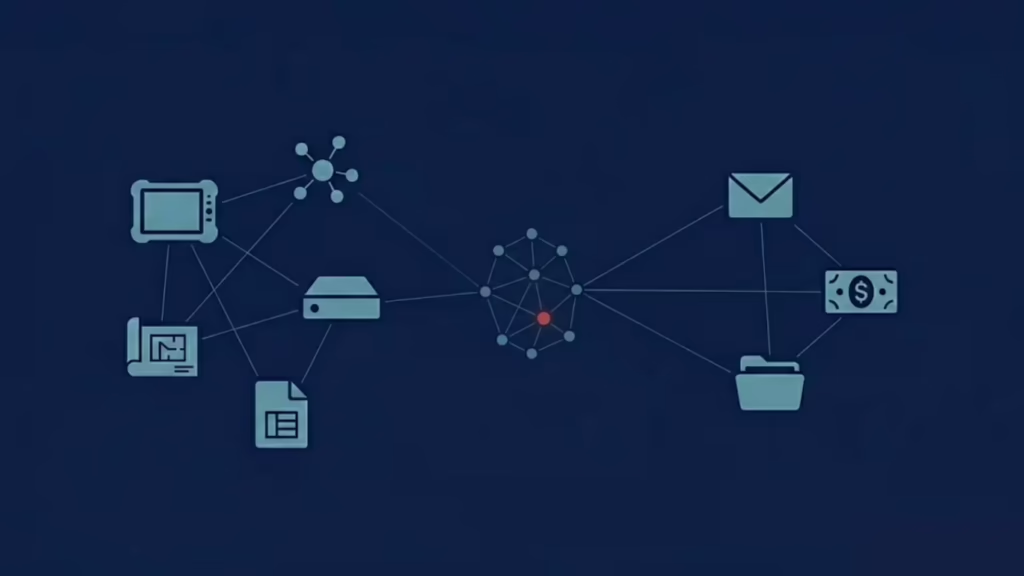
In most construction environments, job site devices and internal business systems share the same network. There is no separation between connected equipment, the project management platform, the draw request system, and the email environment.
Once something gets in, it does not stop at the device. It moves toward whatever is most valuable, and it does it quietly.
One exposed device can create a path into bid data, payment schedules, subcontractor communications, and change order history.
This is not an unusual network configuration. It is the default state of most organizations that built out their infrastructure incrementally, adding systems as projects demanded without revisiting the underlying architecture.
The job site technology proliferated. The network did not change to account for it.
Project Platforms Create the Same Problem
Project management platforms, scheduling tools, and document systems accumulate user accounts faster than anyone reviews them.
Subcontractors, vendors, inspectors, and consultants all get access during a project. When the project closes, that access rarely gets removed.
Nothing breaks. That is why it stays invisible.
After several years of active project work, the list of accounts with access to a construction company’s platforms typically looks nothing like the list of people who should have it. Former vendors. Employees who left. Subcontractors from projects that wrapped two years ago. All of them holding credentials that still work.
Software that is not updated accumulates vulnerabilities on the same timeline as hardware. Platforms that are not audited accumulate access that should not exist.
Updates get deferred for the same reason everything else does: active projects cannot absorb disruption.
The effect is a platform drifting further from current versions, carrying vulnerabilities that the vendor already fixed, in a version nobody installed.
The Risk Builds Quietly
Most construction companies do not know what is actually running across their job sites. Not because they are careless. Because the operational urgency of project delivery has consistently displaced the work required to find out.
The technology adoption was rational. Connected platforms and job site equipment genuinely improved how projects get built. What did not keep pace was any systematic process for governing what was adopted: who owns it, what condition it is in, who has access, and what would be visible if something went wrong.
The attack surface grew. The visibility did not.
The questions that need answering are not complicated. What is connected. What is it running. Who has access to it. What would we know if something happened.
Most organizations have not asked them, not because they are hard to answer, but because asking requires someone to stop and look.
What We Actually Find in Construction Environments
The pattern is consistent across every Sacramento-area construction company we assess.
Connected equipment running original firmware with default credentials. Project management platforms with active accounts from vendors and subcontractors whose work ended years ago. No separation between job site devices and internal business systems. No monitoring that would surface unusual activity across any of it.
None of it is unusual. All of it together is an environment where the conditions for a serious incident are present, the visibility to detect one is absent, and the organizational awareness of either is limited.
The gap is almost always smaller than companies expect when they look at it clearly. The prerequisite is looking at it clearly.
What This Leaves Construction Leadership With
Most construction companies are not making a conscious decision to accept this level of exposure. They are inheriting it through connected equipment, legacy project platforms, shared credentials, and environments that were never designed to be monitored closely.
The problem is not just that risk exists. It is that when something happens, leadership may not have clear answers about what was exposed, how far it reached, or what needs to happen next.
That is the gap most organizations are in right now. Not because of negligence. Because nobody stopped to look.
Talk to Us
If you are not sure what is actually running across your construction environment, now is the time to find out.
Contact Us